
Maintaining Message Consistency Across Omnichannel Assets
In a world where audiences move between platforms, your message is encountered before your brand is recognized. What people notice first is whether your words feel familiar, clear, and honest, no matter where they appear. In healthcare and science-led communication, this consistency matters because audiences are not reading casually; they are reading to decide whether trust is possible. Trust is not built through bold claims. It grows when the same truth appears, reliably, every single time. Think about the last time you noticed a brand on LinkedIn, later visited its website, and then saw its brochure or email. Did it feel like the same voice speaking to you each time? In environments where trust is currency, brands are judged not by how often they speak, but by how consistently they mean what they say. In healthcare communication, it is not about saying more, but about saying what is true, consistently. When evidence-based messages are communicated consistently across channels, they gain strength; when they’re exaggerated or reshaped for impact, trust begins to weaken.
Why Message Consistency Matters More Than Ever
Today’s audience does not consume content linearly. They skim, scroll, cross-check, and compare. Inconsistencies -however small- can create friction. Message consistency helps you:
Build credibility
When the same message is communicated clearly across channels, it signals confidence and intent. Audiences begin to trust that the information is reliable because it doesn’t change depending on the platform or format.
Reduce cognitive load
Familiar language and aligned terminology make complex information easier to process. When audiences don’t have to reinterpret the message each time, understanding comes faster and with less effort.
Strengthen recall
A consistent narrative helps people remember what you stand for. Instead of trying to piece together scattered claims, they retain a clear, unified message that stays with them over time.
Protect brand integrity
In regulated and evidence-based fields, consistency ensures accuracy is preserved. It prevents overstatement, misinterpretation, and dilution of scientific meaning - safeguarding credibility and compliance.
Omnichannel ≠ Multichannel
A common mistake is treating omnichannel as “being present everywhere.”
- Multichannel = Same brand, different silos
- Omnichannel = One brand, one story, many synchronized expressions
True omnichannel communication ensures that every asset, regardless of format or platform, reinforces the same core message, adapted thoughtfully for context.
Anchoring Your Message: The Non-Negotiables
Before thinking about channels, formats, or platforms, every brand needs a message anchor - elements that never change.
This begins with your core brand narrative:
- Who you are
- Why you exist
- What problem you solve
- For whom
- With what philosophy
These fundamentals keep every adaptation grounded, ensuring the message evolves without losing its meaning.
The Role of a Messaging Framework
High-performing brands rely on a documented messaging framework, not just brand guidelines.
A strong framework includes:
- Core narrative
- Key messages (primary, secondary, supporting)
- Approved descriptors and phrases
- Proof points and evidence hierarchy
- What to say and what not to say
This becomes the reference point for every asset creator, internal or external.
Terminology & Language
Especially important in healthcare and technical fields:
- One term for one concept
- No casual substitutions
- No marketing exaggeration where precision is required
Consistency here signals seriousness and scientific integrity.
The Trust Equation
In healthcare industries and pharma marketing, message consistency does more than support branding - it safeguards trust. But when the same facts, tone, and intent echo across every touchpoint, audiences feel reassured:
This brand knows who it is. This brand means what it says.
And trust, once earned consistently, becomes the strongest differentiator of all.
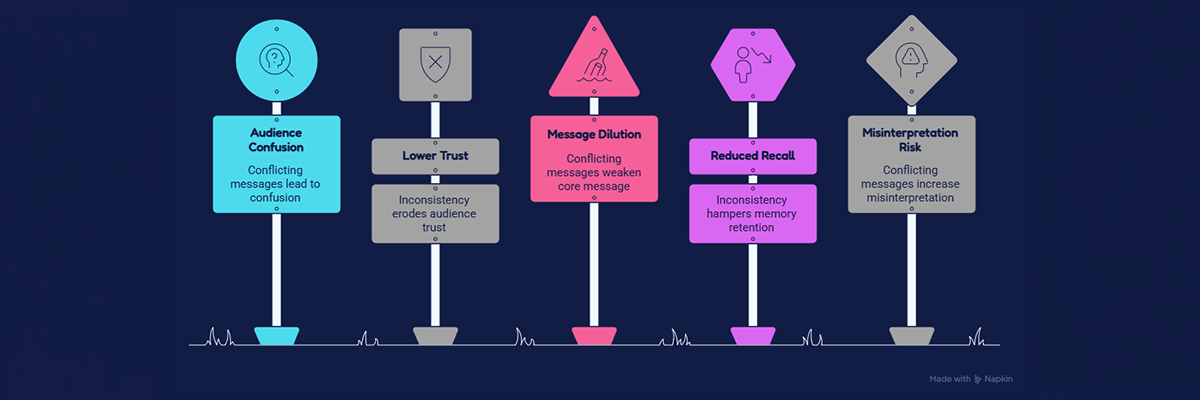
Figure 1: Consistent messaging vs inconsistent messaging. Illustration created using Napkin AI (AI-generated image for illustrative purposes only).
Conclusion
Omnichannel success in healthcare marketing is not about louder messaging across every medium - it’s about clearer, honest, impactful messaging that is evidence-based.
When every asset speaks the same truth, in the same voice, adapted with purpose, that’s when your brand doesn’t just communicate - it resonates.
Disclaimer
Based on HealthMinds’ experience and interpretation. For informational purposes only.
Copyright disclaimer: © 2025 HealthMinds Consulting Pvt. Ltd. All rights reserved